Skip to content


Wellness Without The Noise #18
Rose Hip. Turmeric. Black Pepper.
They’re three ingredients you’ll regularly find in supplements designed for people who want to stay active and look after their joints as they get older.
And unlike plenty of ingredients that have simply become fashionable in the wellness world, there is some genuinely interesting human research behind both Rose Hip and Turmeric.
Researchers have studied Rose Hip preparations in people with osteoarthritis.
Turmeric and curcumin have been investigated across numerous randomised controlled trials.
And Black Pepper has a particularly interesting role to play in the way curcumin becomes available to the body.
So this week, rather than simply telling you these botanicals are “good for your joints”, we thought we’d do something more useful.
Let’s look at what the research has actually found.
Rose Hip and Turmeric: Why Are They Used for Mobility?
Rose Hip and Turmeric come from completely different plants.
Rose Hip is the fruit that develops on a rose plant after flowering. Rosa canina, commonly known as dog rose, is one of the species widely used in botanical preparations.
Turmeric comes from the rhizome of Curcuma longa, a member of the ginger family.
Both have long histories of traditional use, but modern interest hasn’t stopped there.
Researchers have investigated particular preparations of both botanicals in human clinical trials, particularly in relation to joint comfort, pain and physical function.
And some of the findings are certainly worth talking about.
Rose Hip and Turmeric: What Has Research Found?
Let’s start with Rose Hip.
A 2008 meta-analysis brought together three randomised controlled trials involving 287 people with osteoarthritis.
Across the studies, 145 participants received a particular Rose Hip powder preparation and 142 received placebo.
The result?
The researchers found that Rose Hip significantly reduced pain compared with placebo.
They also calculated that people receiving the Rose Hip preparation were around twice as likely to respond to treatment as those receiving placebo.
That’s a pretty interesting finding for a botanical that many people still associate primarily with rosehip syrup.
What Happened in the Individual Rose Hip Trials?
One of the trials included in that body of evidence looked at 94 people with osteoarthritis of the hip or knee.
It was a randomised, double-blind, placebo-controlled crossover study.
Participants received either a Rose Hip preparation or placebo.
After just three weeks, the researchers reported a significant reduction in WOMAC pain scores among those receiving Rose Hip compared with placebo.
After three months, the Rose Hip group also used significantly less rescue medication.
Another randomised controlled trial involving 112 people with osteoarthritis found that significantly more participants receiving Rose Hip reported an improvement in joint pain compared with placebo.
Interestingly, the researchers also reported improvements in stiffness, disability and overall assessment of disease severity.
So we’re not talking about Rose Hip being included in mobility supplements purely because of tradition.
There is human clinical research behind the interest in it.
As always, those studies investigated particular Rose Hip preparations at particular doses, so they don’t prove that every Rose Hip supplement will produce identical results.
But they certainly help explain why Rosa canina continues to attract interest in joint and mobility research.
And What Does the Research Say About Turmeric?
This is where the evidence base becomes considerably larger.
Turmeric contains naturally occurring compounds called curcuminoids, of which curcumin is the best known.
Curcumin has become the focus of a substantial amount of research, including studies involving people experiencing knee osteoarthritis.
A 2021 systematic review and meta-analysis looked at 16 randomised controlled trials involving 1,810 adults with knee osteoarthritis.
Eleven of those trials compared Turmeric extracts with placebo.
The researchers found that Turmeric extracts produced significant improvements in knee pain and physical function compared with placebo.
And that wasn’t a single small study.
It was a review bringing together evidence from more than 1,800 people.
That’s one of the reasons Turmeric has become such an interesting botanical in the mobility conversation.
And the Research Has Continued
A newer systematic review and network meta-analysis published in 2025 looked at 17 randomised controlled trials investigating different Turmeric preparations in people with knee osteoarthritis.
Once again, the researchers found improvements in pain compared with placebo across the Turmeric preparations studied.
Different studies use different formulations, doses and methods, which means researchers are still working to establish which preparations and doses are most effective.
But when we step back and look at the bigger picture, it’s easy to see why Turmeric has attracted so much attention.
We’re not relying solely on traditional use.
We’re now looking at a growing body of human clinical research.
So Why Add Black Pepper to Turmeric?
This is perhaps the cleverest part of the combination.
And no, Black Pepper isn’t there because somebody thought your Turmeric capsule needed seasoning.
One of the challenges researchers identified with curcumin is that relatively little of it becomes available to the body when it is consumed on its own.
This is known as bioavailability.
Black Pepper contains a naturally occurring compound called piperine.
And researchers discovered something particularly interesting when they studied piperine alongside curcumin.
What Happened When Researchers Combined Curcumin and Piperine?
A study published in 1998 investigated curcumin and piperine in both animals and healthy human volunteers.
In the human part of the research, participants received 2g of curcumin, either on its own or alongside 20mg of piperine.
When piperine was added, researchers calculated that the bioavailability of curcumin increased by 2,000% under those study conditions.
Yes, 2,000%.
And that’s where the figure you may have seen quoted in discussions about Turmeric and Black Pepper actually comes from.
It doesn’t mean every Turmeric and Black Pepper supplement automatically produces exactly the same increase. The quantities and formulation used matter.
But it does give us a very good scientific reason why piperine and curcumin are so often paired together.
Black Pepper isn’t simply another ingredient added to make the label look impressive.
There’s a rationale behind it.
Why the Type of Extract Matters
This is another reason it’s worth reading beyond the big number on the front of a supplement.
With botanical supplements, the number of milligrams doesn’t always tell the whole story.
Take Rose Hip.
A concentrated botanical extract may be expressed as the equivalent amount of dried plant material used to produce it.
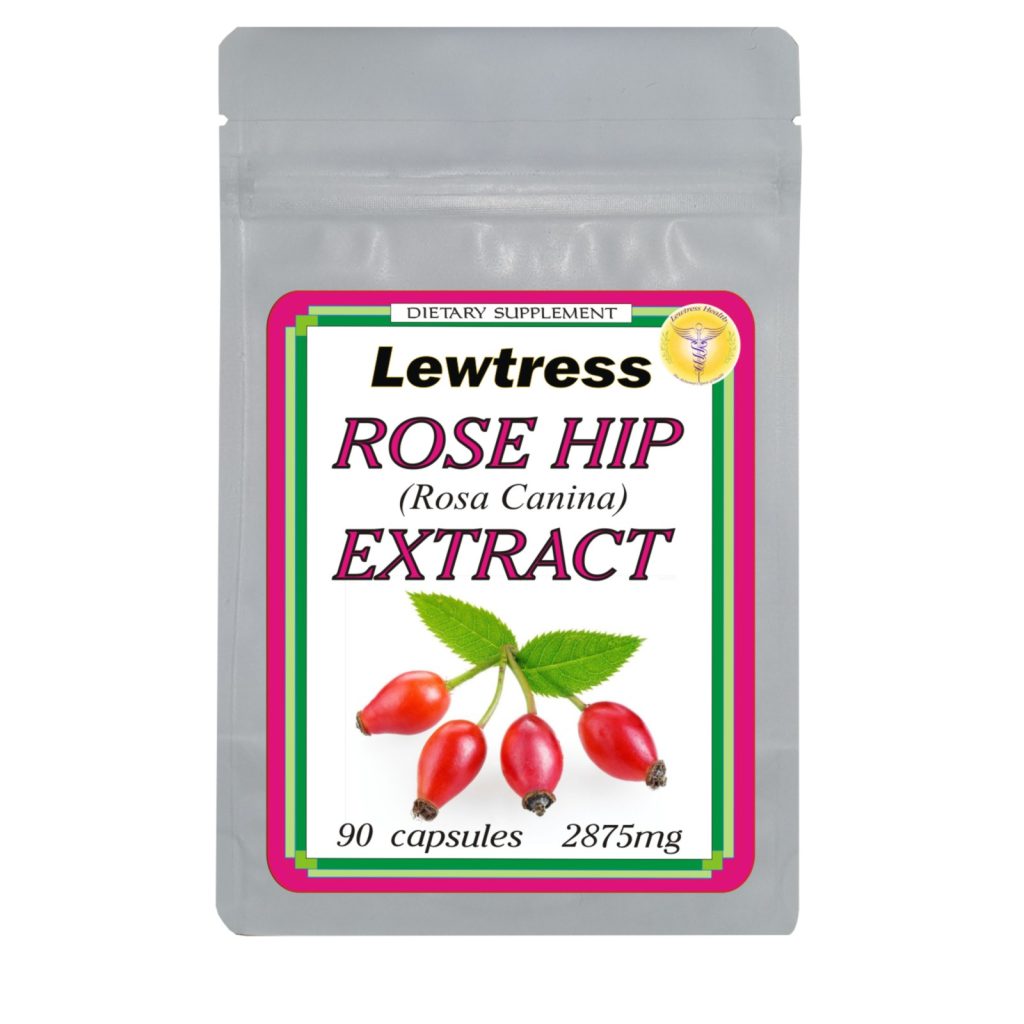
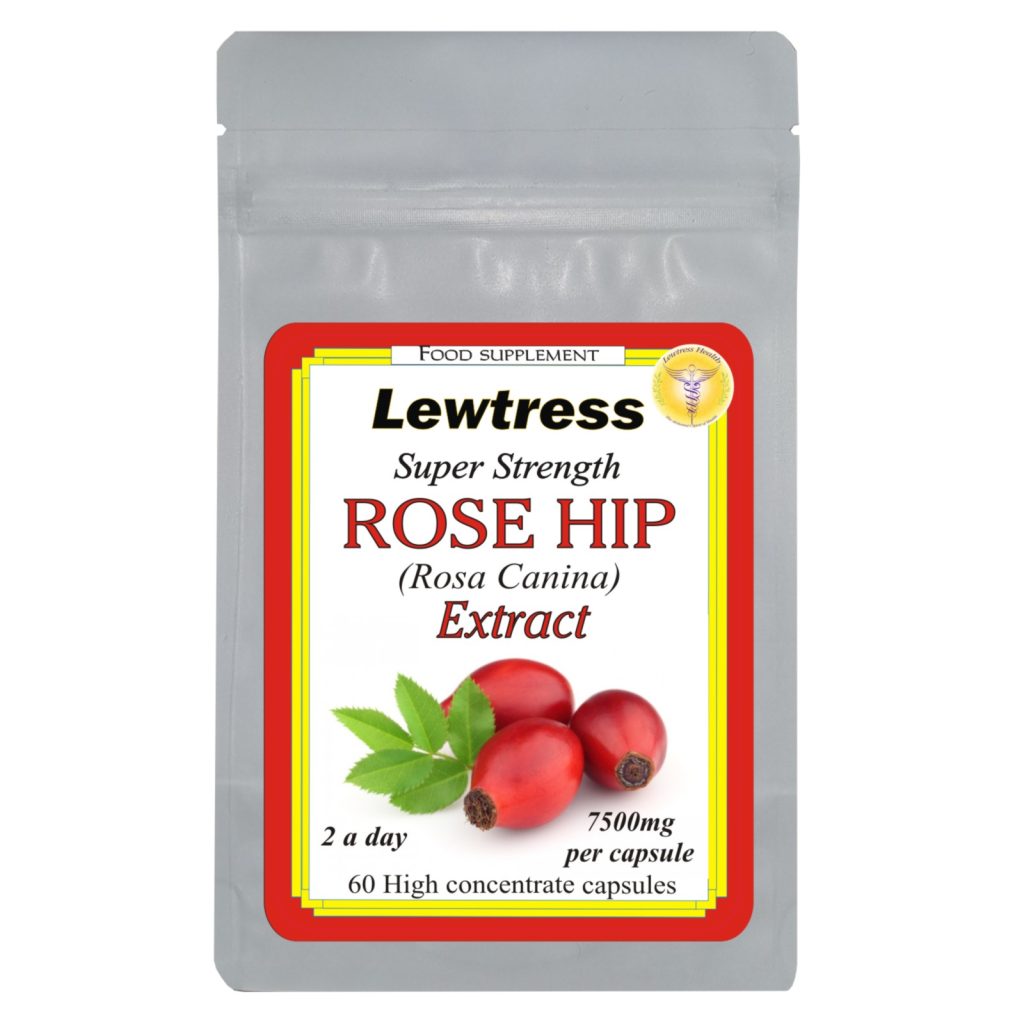
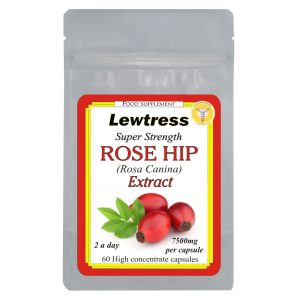
Lewtress Super Strength Rose Hip provides the equivalent of 7,500mg of dried Rose Hip powder per capsule.
Turmeric has another consideration.
Simply knowing the amount of Turmeric doesn’t necessarily tell you how much of its naturally occurring curcuminoids the extract contains.
That’s why standardisation is useful.
It tells you the concentration of particular compounds within an extract rather than simply giving you the overall weight of the botanical.
So Why Do Rose Hip, Turmeric and Black Pepper Make Sense Together?
Now the combination becomes much easier to understand.
Rose Hip has its own history of traditional use and human research around joint comfort and mobility.
Turmeric has an expanding body of clinical research, particularly around curcumin, joint pain and physical function.
And Black Pepper provides piperine, which has been investigated for its ability to increase the bioavailability of curcumin.
They’re not simply three fashionable botanicals thrown into the same conversation.
Each has a reason for being there.
And that’s the thinking behind the Lewtress Comfort & Mobility Bundle.
What’s Actually in the Lewtress Comfort & Mobility Bundle?
The bundle brings together two concentrated botanical formulations.
Super Strength Rose Hip Extract
Each capsule provides the equivalent of 7,500mg of dried Rose Hip powder, using Rosa canina extract.
It’s produced without fillers, additives or artificial preservatives.
Alongside it is:
Turmeric & Black Pepper Complex
Each capsule contains 465mg of Turmeric extract, standardised to 10.95% curcuminoids, providing 50mg of curcuminoids per capsule.
It also contains 5mg of Black Pepper extract, standardised to contain 6% piperine, together with 30mg Rose Hip shell.
The formulation is suitable for vegans and vegetarians and is produced without fillers, additives or artificial preservatives.
So when you look beyond the names on the bottles, there’s a clear rationale to the combination.
There’s One Thing We Think You Should Know
Just as we explained in our recent article about Passiflora and sleep, there’s an important distinction between research into an ingredient and clinical evidence for a particular finished supplement.
The studies we’ve discussed here were not conducted using the Lewtress Comfort & Mobility Bundle.
Researchers used particular Rose Hip preparations, particular Turmeric or curcumin formulations and particular doses.
So we aren’t going to take the results of those trials and tell you:
“This bundle has been clinically proven to produce the same results.”
It hasn’t.
What the research does show is something rather more useful.
It shows that Rose Hip and Turmeric aren’t simply being talked about because they’re fashionable wellness ingredients.
They’ve both been investigated in human clinical research, with encouraging findings around pain and physical function in the populations studied.
And research into piperine gives us a scientific explanation for why Black Pepper is so frequently combined with Turmeric.
That’s a good story without needing to exaggerate it.
Does That Mean Rose Hip and Turmeric Can Treat Arthritis?
No, and this distinction matters.
Some of the research involved people with osteoarthritis because researchers needed a defined population in which outcomes such as pain, stiffness and physical function could be measured.
That does not turn a food supplement into a treatment for osteoarthritis.
If you’re experiencing persistent joint pain, swelling, stiffness or a noticeable change in mobility, it’s important to understand what’s causing it rather than simply reaching for a supplement.
But there’s nothing wrong with being interested in botanicals that have attracted genuine scientific research as part of a wider approach to looking after yourself.
And Don’t Forget the Things That Aren’t in a Capsule
Looking after mobility isn’t just about supplements.
Keeping moving matters.
Maintaining muscle and strength matters.
Eating well matters.
Sleep matters.
And doing the things that keep you active matters.
For one person that might mean walking, gardening and strength training.
For somebody else it might mean swimming, cycling or simply making a conscious effort to move more during the day.
Supplements can complement that routine.
They don’t replace it.
Rose Hip and Turmeric: The Real Story
So, are Rose Hip and Turmeric just another wellness trend?
The research suggests there’s considerably more to the story than that.
Rose Hip preparations have been investigated in randomised controlled trials, with researchers reporting improvements in pain and other measures in people with osteoarthritis.
Turmeric has an even larger evidence base, with systematic reviews bringing together numerous randomised trials and reporting improvements in pain and physical function in the populations studied.
And research into piperine helps explain why Black Pepper has become such a familiar companion to Turmeric.
None of that means we need to promise miracles.
Actually, we think it’s more interesting when you don’t.
There is genuine science behind why these botanicals continue to attract attention.
There are encouraging findings.
Research is continuing.
And we can talk about all of that without turning a food supplement into something it isn’t.
Less hype. More understanding.
That’s Wellness Without The Noise #18.
Explore the Comfort & Mobility Bundle
Discover Lewtress Super Strength Rose Hip and Turmeric & Black Pepper Complex, paired together in our Comfort & Mobility Bundle.
View the Comfort & Mobility Bundle →
Research & References
Christensen R, Bartels EM, Altman RD, Astrup A, Bliddal H. Does the hip powder of Rosa canina (rosehip) reduce pain in osteoarthritis patients? A meta-analysis of randomized controlled trials. Osteoarthritis and Cartilage. 2008;16(9):965-972. View on PubMed
Wang Z, Singh A, Jones G, et al. Efficacy and Safety of Turmeric Extracts for the Treatment of Knee Osteoarthritis: a Systematic Review and Meta-analysis of Randomised Controlled Trials. Current Rheumatology Reports. 2021;23(2):11. View on PubMed
Wai HS, Pathomwichaiwat T, Suansanae T, Nathisuwan S, Rattanavipanon W. Effect of turmeric products on knee osteoarthritis: a systematic review and network meta-analysis. BMC Complementary Medicine and Therapies. 2025;25:292. View on PubMed
Shoba G, Joy D, Joseph T, Majeed M, Rajendran R, Srinivas PS. Influence of piperine on the pharmacokinetics of curcumin in animals and human volunteers. Planta Medica. 1998;64(4):353-356. View on PubMed
Research discussed in this article relates to the particular Rose Hip, Turmeric, curcumin and piperine preparations investigated in individual studies. It should not be interpreted as clinical evidence that Lewtress Super Strength Rose Hip, Turmeric & Black Pepper Complex or the Lewtress Comfort & Mobility Bundle will produce the same outcomes.
Food supplements should not be used as a substitute for a varied, balanced diet and healthy lifestyle. If you have a medical condition, take medication, are pregnant or breastfeeding, or have concerns about persistent joint pain or changes in mobility, seek advice from an appropriate healthcare professional.