Skip to content


Wellness Without The Noise #22
Less hype. More understanding.
Let’s talk about something that doesn’t always get the attention it deserves when we’re discussing menopause.
Sexual wellbeing.
We hear plenty about hot flushes, night sweats and disrupted sleep. But what about the changes in desire, intimacy, mood and that general feeling of being yourself?
For many women, perimenopause and menopause bring changes that go far beyond their menstrual cycle.
And while we’re finally having more open conversations about women’s health, there’s still a great deal to explore about the different factors that influence how women feel during this stage of life.
Which brings us to a rather fascinating botanical from the mountains of Peru.
Maca.
Used traditionally for centuries and increasingly investigated by modern researchers, this unassuming root has attracted scientific interest for a particularly intriguing reason.
Clinical studies have reported improvements in aspects of women’s sexual wellbeing and psychological symptoms associated with menopause.
And some of those improvements occurred without significant changes in measured reproductive hormone levels.
So what exactly have researchers discovered?
Meet Maca: A Little Root With a Long History
Maca, scientifically known as Lepidium meyenii, grows high in the Peruvian Andes, where the challenging mountain environment has shaped its long history as a traditional food crop.
Despite its rather exotic reputation, Maca belongs to the same plant family as broccoli, cabbage and turnips.
Its rounded, fleshy underground portion has been cultivated and eaten by Andean communities for generations.
Traditionally, Maca has been associated with vitality, fertility and sexual wellbeing.
Today, it has attracted international interest, particularly among people exploring botanical ingredients as part of their approach to everyday wellbeing.
But Maca’s story doesn’t end with traditional use.
Researchers have been investigating whether its historical reputation is reflected in measurable changes in human health.
And some of the results are particularly interesting for women approaching or experiencing menopause.
Maca and Menopause: Why Are Researchers Interested?
Menopause involves significant hormonal changes, but the experience is far more complex than hormone levels alone.
Sleep, emotional wellbeing, stress, relationships, physical comfort and sexual desire can all be affected.
And importantly, every woman’s experience is different.
This complexity has encouraged researchers to investigate a range of approaches to menopausal wellbeing, including traditional botanicals such as Maca.
One area of particular interest has been whether Maca influences women’s experiences of sexual difficulties and psychological symptoms.
Several clinical studies have explored exactly that.
Maca and Menopause: What Have Clinical Studies Found?
Study 1: Improvements in Sexual Wellbeing, Anxiety and Mood
In 2008, researchers published a clinical trial in the journal Menopause investigating Maca in postmenopausal women.
The study involved 14 women and used a randomised, double-blind, placebo-controlled crossover design.
Participants received 3.5g of Maca powder daily for six weeks and placebo for another six weeks.
Researchers assessed psychological symptoms, sexual difficulties and reproductive hormone levels.
The findings were encouraging.
During the Maca treatment period, participants reported improvements in measures of sexual dysfunction, alongside reductions in anxiety and depression scores compared with placebo.
For women navigating menopause, these are important areas of wellbeing.
But there was another finding that made the study particularly interesting.
The improvements were not accompanied by significant changes in the reproductive hormone levels measured.
This raised an intriguing possibility: Maca’s relationship with sexual and psychological wellbeing might involve mechanisms other than simply increasing oestrogen or other reproductive hormones.
That distinction matters because women’s experiences of menopause cannot always be explained by hormone levels alone.
Research: Brooks et al., 2008, Menopause.
Study 2: Further Positive Findings in Postmenopausal Women
A second clinical trial, published in Climacteric in 2015, explored Maca in 29 postmenopausal women.
Participants received 3.3g of Maca daily during the active treatment period.
The researchers examined psychological wellbeing, menopausal symptoms, quality of life, hormone levels and blood pressure.
Once again, researchers reported positive findings.
Maca treatment was associated with improvements in depression scores and a reduction in diastolic blood pressure compared with placebo.
And just as in the earlier study, there were no significant changes in the reproductive hormone measurements assessed.
Two separate clinical investigations had therefore reported favourable outcomes in aspects of postmenopausal wellbeing without corresponding changes in measured hormone levels.
It was another interesting development in understanding this traditional Peruvian botanical.
Research: Stojanovska et al., 2015, Climacteric.
Study 3: What Did a Review of Multiple Trials Discover?
Individual clinical trials provide valuable information, but looking at several studies together can help researchers identify broader patterns.
In 2011, a systematic review published in Maturitas examined four randomised clinical trials involving a combined 202 women.
The review focused on Maca and menopausal symptoms.
All four trials reported favourable findings on the menopausal symptom measures used.
That’s a noteworthy result.
It suggests that the positive observations weren’t confined to a single research team or one isolated study.
The review authors also recognised that the available trials were relatively small and that further high-quality research was needed to establish how reliably those results could be reproduced.
Nevertheless, the findings provide a scientific basis for continued interest in Maca and menopausal wellbeing.
Research: Lee et al., 2011, Maturitas.
What About Maca and Female Libido?
Let’s be honest.
Changes in sexual desire can be one of the more personal and sometimes difficult aspects of menopause to talk about.
For some women, intimacy changes because of physical symptoms. For others, stress, disrupted sleep, mood or changes in confidence may play a role.
And for many, it’s a combination of factors.
Sexual wellbeing is complex, which makes research into this area particularly valuable.
Maca has been investigated not only in menopausal women but also in other groups experiencing sexual difficulties.
For example, a 2015 clinical trial published in Evidence-Based Complementary and Alternative Medicine investigated Maca in women experiencing antidepressant-associated sexual dysfunction.
Participants received 3g of Maca daily or placebo for 12 weeks.
The researchers reported encouraging findings, particularly among postmenopausal participants.
Although this study investigated a specific type of sexual dysfunction, rather than menopause itself, it contributes to the wider scientific interest in Maca and female sexual wellbeing.
Taken together, these studies help explain why Maca continues to attract attention in this field.
It’s not simply a traditional ingredient with a colourful reputation.
There are published human clinical trials reporting favourable outcomes in areas of sexual and psychological wellbeing.
Research: Dording et al., 2015.
Here’s the Really Interesting Part: It’s Not Necessarily About Increasing Oestrogen
When we talk about menopause, the conversation often centres on hormones.
And understandably so.
Oestrogen levels change significantly during the menopausal transition, influencing many physical and emotional experiences.
But the research into Maca raises an interesting question.
Could changes in how women feel occur without measurable increases in reproductive hormone levels?
In the Brooks and Stojanovska studies, researchers reported improvements in certain wellbeing measures without significant changes in the hormones they assessed.
That doesn’t tell us exactly how Maca works.
But it does suggest that researchers need to look beyond the simplistic idea of a botanical merely boosting or balancing hormones.
The mechanisms remain an active area for investigation, and there may be several factors involved.
It’s one of the reasons Maca makes such an interesting subject for modern botanical research.
And Maca Isn’t Just a Women’s Botanical
Although our focus this week is menopause, Maca has also been studied in men.
Research has explored its relationship with sexual desire, sexual function and aspects of reproductive health.
For example, a placebo-controlled study published in Andrologia in 2002 reported improvements in self-reported sexual desire among healthy adult men taking Maca over an eight-week period.
Interestingly, those findings were not explained by changes in measured testosterone levels.
That makes Maca’s research story relevant to both men and women.
Its traditional reputation for vitality and sexual wellbeing has encouraged scientists to investigate a range of possible relationships with human health.
And while different studies have examined different populations and outcomes, the recurring interest in sexual wellbeing is particularly noteworthy.
Research: Gonzales et al., 2002, Andrologia.
Why the Type of Maca Matters
As interest in Maca has grown, so has the range of supplements available.
You’ll now find Maca sold as whole-root powder, capsules and concentrated extracts.
But these aren’t necessarily interchangeable.
Clinical trials have used particular preparations and doses, and the composition of commercial supplements can vary.
That means it’s important to understand what a product contains rather than assuming that every Maca supplement is identical.
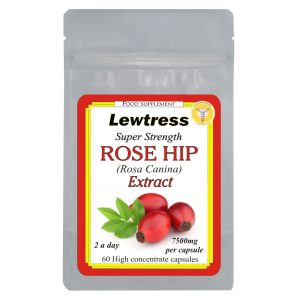
At Lewtress Natural Health, our Maca Extract combines this traditional Peruvian botanical with Rose Hip powder in convenient, vegan-friendly capsules.
It’s part of our wider range of botanical supplements for people interested in taking a thoughtful, informed approach to their wellbeing.
Discover Lewtress Maca Extract in our online shop.
So, What Can We Take Away From the Research?
There are several reasons Maca deserves attention.
First, its traditional use stretches back centuries, providing a fascinating starting point for modern investigation.
Second, researchers have gone beyond tradition and conducted controlled human clinical trials.
And third, those trials have reported favourable findings in areas that matter to many women, including sexual wellbeing and psychological symptoms associated with menopause.
Perhaps most intriguingly, some of these results occurred without significant changes in measured reproductive hormones.
That’s an interesting scientific observation and one that deserves further exploration.
Of course, research is an ongoing process. Larger clinical trials will help clarify which preparations, doses and populations are most likely to benefit.
And Maca shouldn’t be viewed as a replacement for established medical care or menopause treatments when those are needed.
But the existing research gives us a worthwhile and genuinely interesting conversation to have.
The Bigger Picture: Women’s Wellbeing Deserves More Attention
For too long, conversations about menopause have focused on a relatively narrow collection of symptoms.
Yet women’s experiences extend into almost every aspect of life, including confidence, relationships, emotional wellbeing and intimacy.
It’s encouraging to see researchers investigating these subjects and examining botanical ingredients that have been valued traditionally for generations.
Maca is a particularly interesting example of where traditional knowledge and modern scientific investigation meet.
And the research reminds us of something important.
Understanding women’s wellbeing involves looking at the whole experience, not just a set of hormone measurements.
That’s a conversation worth having.
And it’s exactly the sort of conversation we want to encourage through Wellness Without The Noise.
Less hype. More understanding.
The Science Behind This Article
- Brooks, N. A., et al. (2008). Beneficial effects of Lepidium meyenii (Maca) on psychological symptoms and measures of sexual dysfunction in postmenopausal women are not related to estrogen or androgen content. Menopause, 15(6), 1157-1162.
https://pubmed.ncbi.nlm.nih.gov/18784609/ - Stojanovska, L., et al. (2015). Maca reduces blood pressure and depression, in a pilot study in postmenopausal women. Climacteric, 18(1), 69-78.
https://pubmed.ncbi.nlm.nih.gov/24931003/ - Lee, M. S., et al. (2011). Maca (Lepidium meyenii) for treatment of menopausal symptoms: A systematic review. Maturitas, 70(3), 227-233.
https://pubmed.ncbi.nlm.nih.gov/21840656/ - Dording, C. M., et al. (2015). A double-blind placebo-controlled trial of Maca root as treatment for antidepressant-induced sexual dysfunction in women. Evidence-Based Complementary and Alternative Medicine, 2015, 949036.
https://pubmed.ncbi.nlm.nih.gov/25954318/ - Gonzales, G. F., et al. (2002). Effect of Lepidium meyenii (Maca) on sexual desire and its absent relationship with serum testosterone levels in adult healthy men. Andrologia, 34(6), 367-372.
https://pubmed.ncbi.nlm.nih.gov/12472620/
This article is for educational purposes and does not replace personalised medical advice. Food supplements are not substitutes for a varied diet or prescribed treatments.